A Tale of Two Museums

Recently, I had the privilege of attending a day-long event at a Huguenot museum in a region three hours north of us. Housed in the former home of Marie Durand and her brother, Pierre, the story behind the tiny Musée du Vivarais looms large in French Protestant history and hearts.

During the early 18th century, the Durands held fast to their faith, despite heavy persecution by King Louis XIV. Pierre became a well-known preacher, specifically sought after by the authorities. When he eluded the king's soldiers, they arrested his father and, later, his sister.
Incarcerated in the Tour de Constance in Aigues-Mortes at age nineteen, Marie stood firm. A simple conversion to the king's faith would have set her free. For the Protestants of the time, this amounted to a denial of their beliefs.
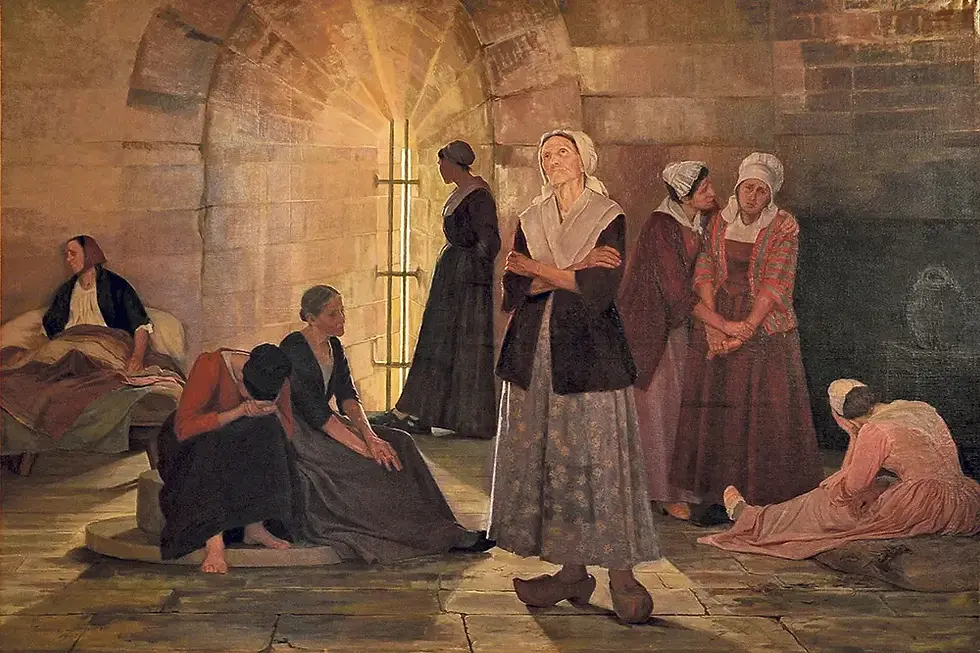


Marie remained in prison for thirty-eight years. A pillar of strength to her fellow prisoners, she wrote letters to family and friends seeking aid and sustenance for all. Marie famously scratched the word RESISTER into the prison floor, where it remains today.

RESISTANCE was no mere idea for the Huguenots. They lived it, even unto death. Their inspirational faith and fortitude resound through the ages. After visiting a Huguenot museum or reading specific incidents of young people giving up their lives rather than deny God, it can't help but provoke the question: Would I do the same?
Join me on a tour of the Durand home:

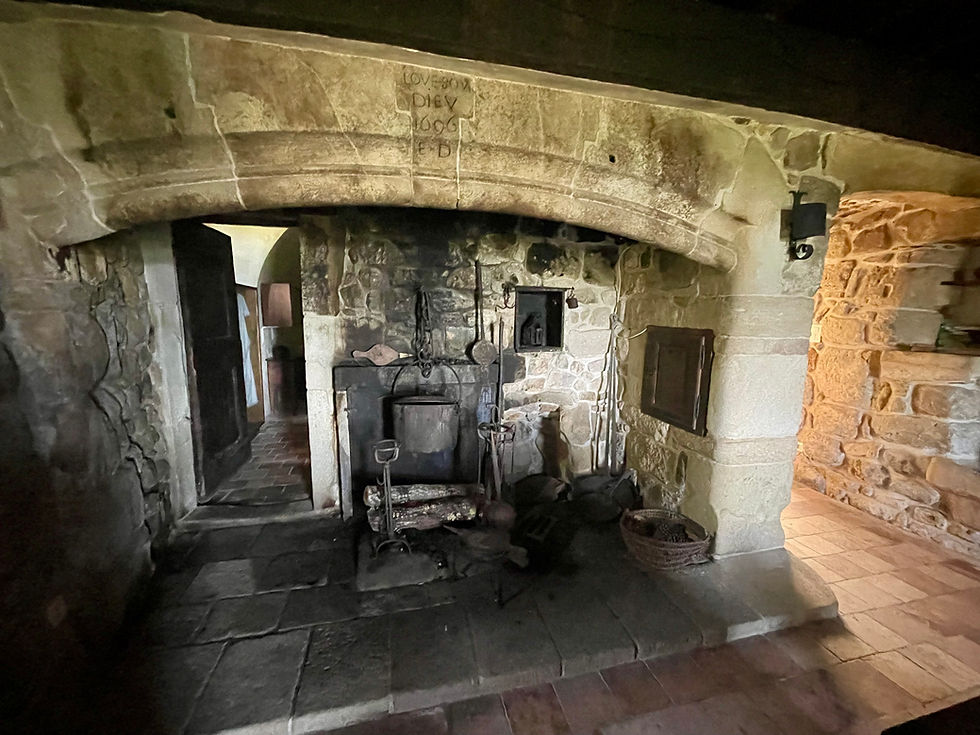
The central fireplace was a serious affair. Its multiple functions included heating the room and those adjacent, plus cooking the meals in the hanging iron pot.


Despite soaring temperatures, over a hundred faithful gathered outside Marie and Pierre's home for the morning church service under the chestnut trees.

The day included sharing and signing my books. It was wonderful to connect with so many Huguenot descendants.
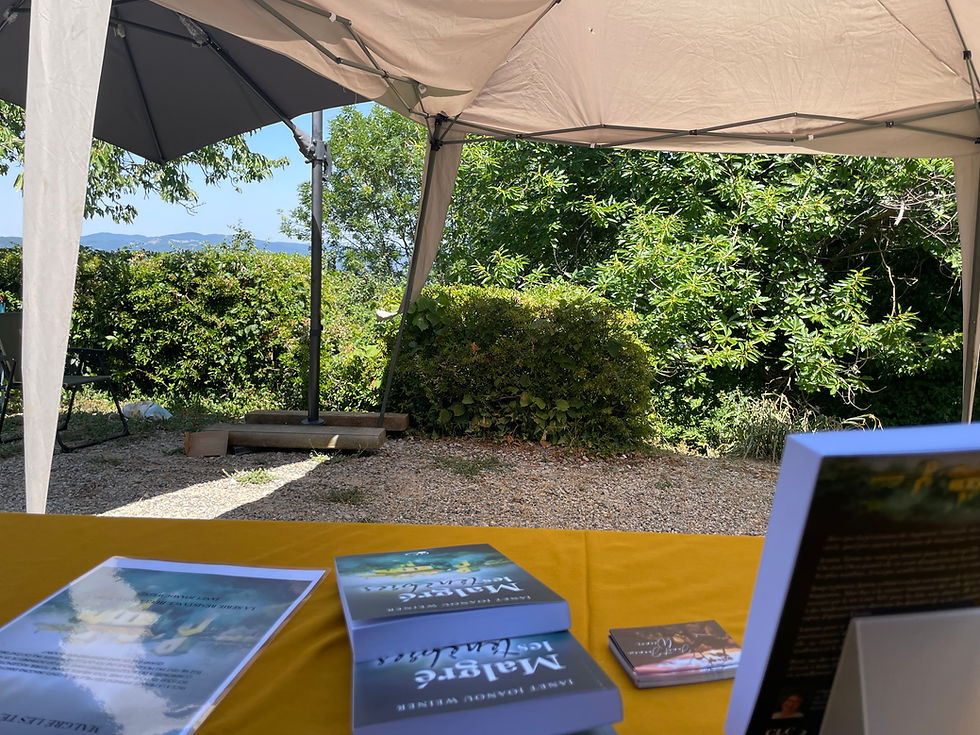

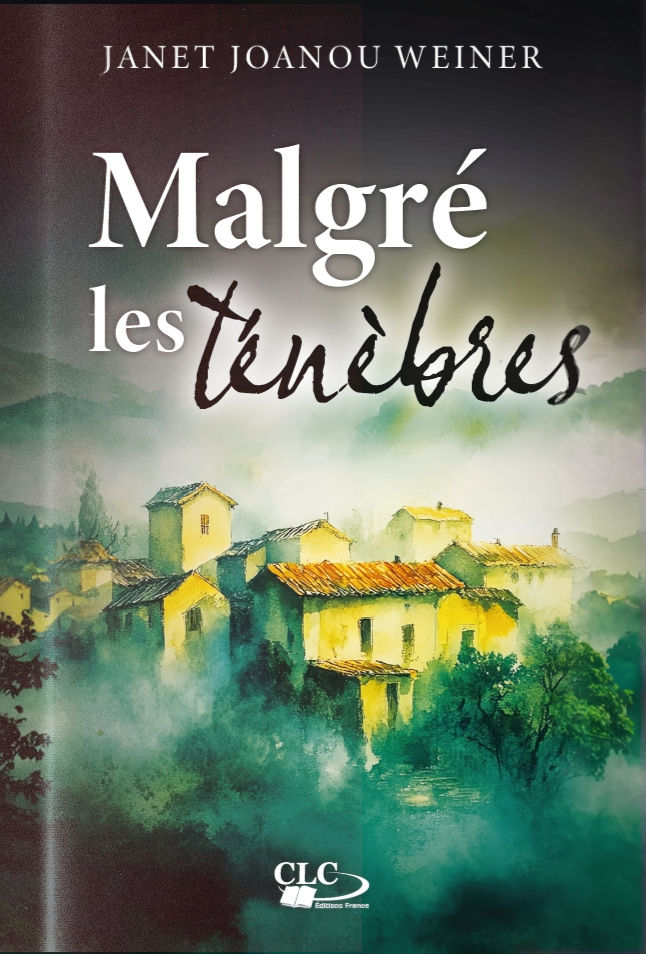
and of course, Malgré les ténèbres, Tome 1 en français
We now go south to the Cévennes region, historically a bastion of French Protestantism. A few years ago, I needed to drive an hour to Montpellier for a dental surgeon. The dentist was not from the area, and when he heard I lived in the Cévennes, he exclaimed, "Ahhh! The Protestants, right?" He then looked up Protestantism on his computer to be sure he understood just what it is.
When we lived in Paris, I had a similar experience. One of our daughters was in a private preschool. Before Christmas, the teacher pulled me aside to explain that the school planned to gift each child with a book that included the Nativity. He'd seen on our application that we were Protestant, and he thought we believed in Jesus, but he wasn't sure. I assured him that YES, we most definitely believe in Jesus and a book with the story of his birth would be welcome.
Back to the Cévennes. Today, many Huguenot descendants live in the area. I love seeing the unique Huguenot cross on both men and women around my town. They are rightfully proud of their heritage.

Each facet of the design is symbolic: the four fleur-de-lys connecting the Maltese cross represent the Huguenots' loyalty to the king despite differing faiths. They also represent the four Gospels. The dove is the Holy Spirit. In some versions, a teardrop replaces the dove, in memory of the struggle. Some suggest it is a drop of blood, which is also appropriate as much blood was shed.
Our second Huguenot museum is the Musée du Désert, here in the Cévennes. Its name refers to the "desert" period between the revocation of the Edict of Nantes (outlawing Protestantism) and the freedom that came after the French Revolution.
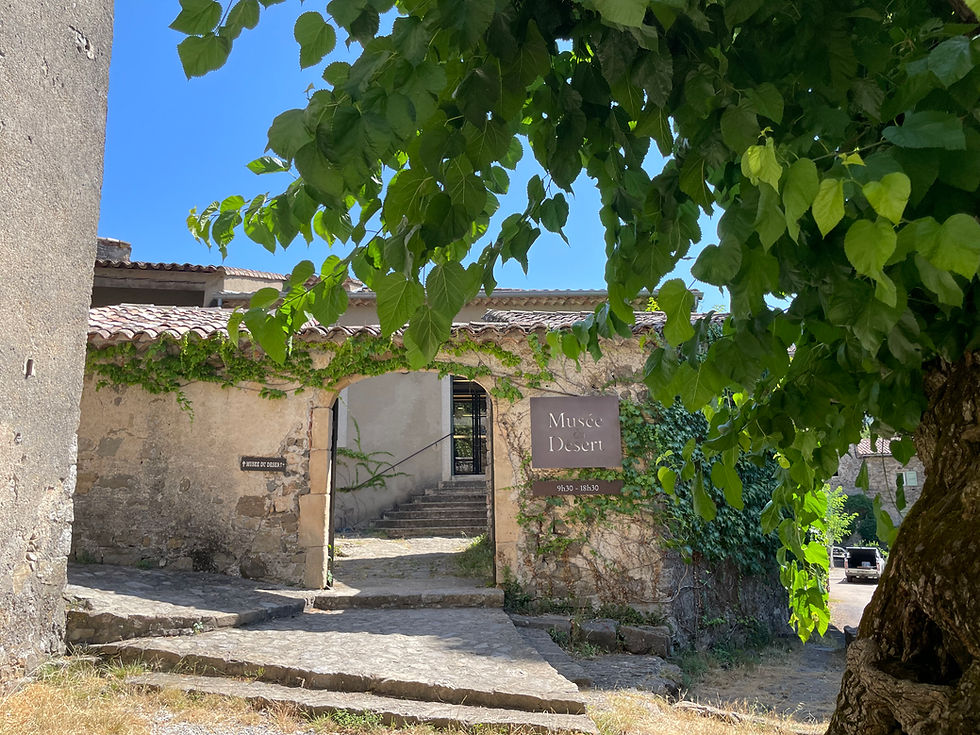
This museum holds a significant place in the Huguenot psyche. Housed in the former home of Roland Laporte, a leader in the revolt against the king's suppression, it contains interesting artifacts, drawings, painting, and everyday objects. Much of the old structure remains, giving modern viewers an idea of life in the seventeenth century. It is the largest Protestant museum in France.
Here's a brief glimpse inside:
Left to right: Rolland's Bible; cute grandchildren in the cachette, the hiding place under the pantry floorboard; Bibles and Psalters, some tiny ones to hide in women's chignons
Left to right: narrow passage between buildings; water basin with scripture: "You broke open the fountain and the flood" Psalm 74:15
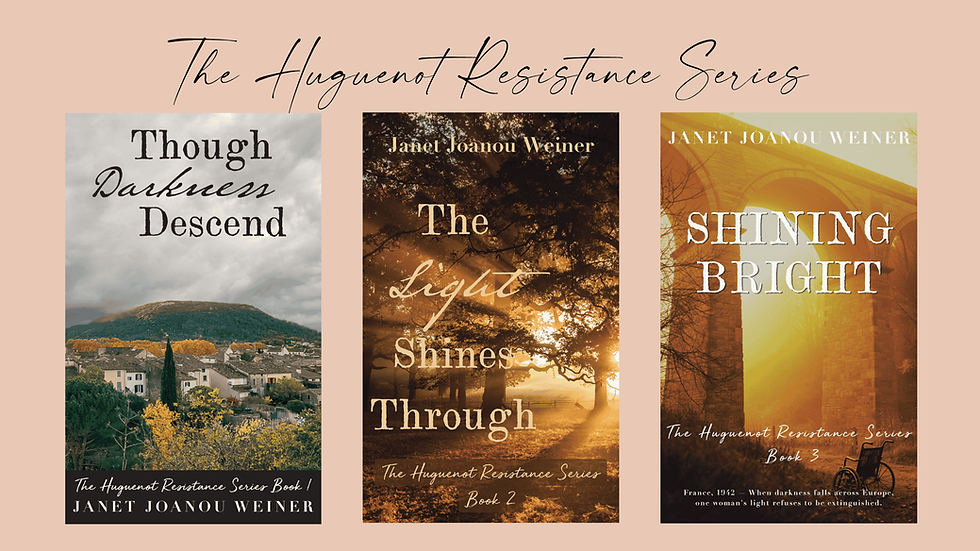
The first chapter of Shining Bright takes place in 1942, during the annual gathering of thousands of Protestants on the grounds beside the Musée du Désert. The Assemblée du Désert occurs on the first Sunday in September since 1911.
In 1942, Pastor Marc Boegner exhorted the faithful to go to great lengths in helping their neighbors. Attending the service were dozens of Jewish refugees—including children and teens—evading internment and deportation. He denounced the antisemitic policies of the Nazis and the collaborationist French government of Vichy.
His sermon and public stance on the issues marked a turning point in the French Resistance movement. And every single refugee went home with a family that day.
If how this played out interests you, check out Shining Bright.
If you'd like to see more inside the museum or of the Assemblée du Désert, check out this post:
May we stand firm in our faith and exhibit the courage of the Huguenots.
La vie est belle...


Absolutely lovely post, Janet! You put a tremendous amount of work into this. I loved seeing all the pictures and hearing about the women who stood strong for their faith. A great witness for us today. :)
Reading Janet’s books prior to visiting this museum (and Janet’s and Dudley’s massive chateau) where much Huguenot history took place brought all that history to light and life. It was as if we had stepped back in time; the feeling was quite overwhelming. Janet’s writing is some of the most powerful reading I’ve done in recent memory, powerfully impacting my understanding and appreciation of our rich Huguenot history.
Is there a way of purchasing the cross pin?